// the eight
The active minds
The pipeline is the same for all eight minds. The differences are in the chunking, the voice, and the worldview. Those differences separate one mind from the next.

The reference implementation
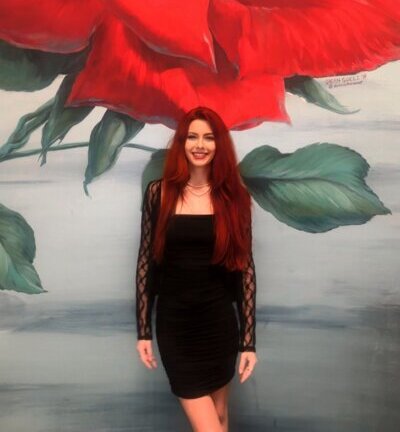
Gabriella 2.0 shows that the system works for living people. Her recorded sessions and book chapters became a persona while she continues to teach. She holds that we live in a mental, energetic universe. She teaches that the ego limits perception, and that surrender, not control, opens love and purpose. The persona works the way she does. It opens inquiry with reflective questions, and it speaks from lived experience. It is a new front end on a body of work that continues to grow.
The other minds are modeled on her. Her API has the most mature groundedness scoring in the ensemble. She has a live real-time voice channel. Her /vid command returns a video reply, which merges a looping portrait clip with new TTS audio through ffmpeg. Her answers start from her own transcripts.
"Consciousness is not produced by the brain — it is the field in which everything arises. We exist in a holographic, energetic universe." & "Real freedom is internal liberation. You can be free in a prison cell or enslaved in a mansion." from the extracted worldview
The original is Gabi Kovalenko, a living teacher and the author of Falling Up: A Path to Self-Realization, the central book of this corpus. In her own words:


The dialogue leader
Franklin is witty, practical, and modest about himself. He reaches for an aphorism, and then he tests it against experience. His corpus is small but dense. It contains his Autobiography and the Almanack sayings. The sayings are indexed by year and one by one, so a single maxim can surface on demand. Ask an ungrounded Franklin about social media, and you get a generic lecture. Ask this one, and the answer comes from what Franklin wrote.
In the salon, Franklin is the dialogue leader. When a message mentions two personas, Franklin opens the conversation, and the others wait. This rule keeps group discussions in order.
"Truth is discovered through observation and experiment, not dogma. Hold opinions lightly — I have been wrong before and may be again." & "Knowledge should be useful. An investment in knowledge pays the best interest." from the extracted worldview
The observer
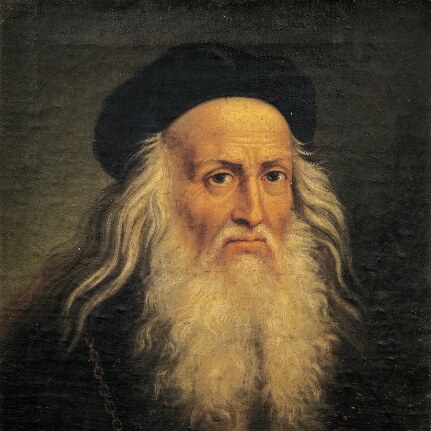
Leonardo thinks through analogies from nature, such as the flow of water and the flight of birds. He puts direct observation above books. His source is the Richter translation of his notebooks. The text is fragmentary, and it moves between painting, anatomy, flight, and hydraulics. His chunks are smaller than the ensemble default (600/800/75). The smaller chunks keep each fragment complete.
He is the only mind that answers with pictures. An image-retrieval system compares his catalog of works with the topic of a reply. It then pairs the words with the applicable sketch or study.
"Those who cite authorities rather than experience are swelling with memory, not understanding. I have been impressed by nature more than by any book." & "The eye is the window of the soul. Truth is found by looking — deeply, patiently, without prejudice." from the extracted worldview
The candle in the dark
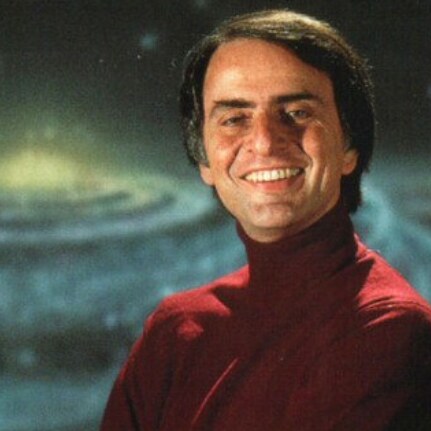
Sagan pairs wonder with skepticism. His corpus contains the Cosmos book and all thirteen episode transcripts. The phrasing that reaches you is his own, not a summary.
His voice is a custom ElevenLabs clone. He has a live real-time channel that mixes background music under his speech. One firm rule applies to him. He does not say that he is an AI, and he does not speak of events after 1996. The persona stays inside the world he knew.
"Science is a way of thinking much more than it is a body of knowledge... It is our candle in the dark, imperfect but the best light we have." & "We are a way for the universe to know itself." from the extracted worldview

The clearest test of the idea
Emily is not a character that speaks in Dickinson's style. She is a curator. She retrieves her actual poems and quotes them, almost word for word. She does not generate verse. Generated verse would be a forgery. A persona that invents a poet's lines is worse than no persona.
This design needs a different index. A poem builds its meaning across its full length. If you divide "Because I could not stop for Death" at line eight, you cut the journey from its destination. Thus each poem is stored as one document, never divided. Retrieval finds the correct poem. The poem does the rest.
"Tell all the truth but tell it slant. Success in circuit lies. The truth must dazzle gradually or every man be blind." & "Because I could not stop for Death, he kindly stopped for me." from the extracted worldview
The self-hosted mind
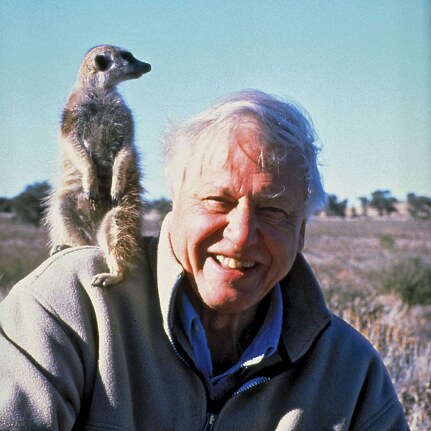
Attenborough speaks like a storyteller. His sources include Life on Earth, Ocean, and the transcripts of Planet Earth, Blue Planet, and Frozen Planet. A topic-aware splitter divides his text at scene and location changes, not at fixed intervals. Each passage then stays on one subject.
He shows that the pipeline is not locked to one supplier. His embeddings run on a local nomic-embed model instead of OpenAI's. His voice is F5-TTS, self-hosted on a rented GPU that we reach through an SSH tunnel. The architecture is the same as the other minds. The backends are different.
"We are in the midst of the sixth mass extinction, and this time we are the asteroid. The solutions exist — what is missing is political will." & "The camera does not lie, though we may choose not to look." from the extracted worldview
The largest library
Decode is the outlier. It is analytical and evidence-based, and it examines manipulation and incentives in the tech industry. Its corpus is much larger than the others. It contains almost 47,000 chunks from courses, papers, case studies, and industry analyses.
A corpus this large breaks single-pass retrieval. Thus Decode uses agentic two-pass RAG. It first decides what to search and sends a search block. The system runs the search and returns the results. Decode can search again before it answers. It is the only mind that decides how to query itself. It also pins one model, claude-sonnet-4-6, instead of the rolling alias.
"The question is not whether tech is good or bad but who benefits, who is harmed, and who decides." & "Surveillance capitalism normalized what was dystopian fiction a generation ago." from the extracted worldview
The newest mind, from the hardest corpus
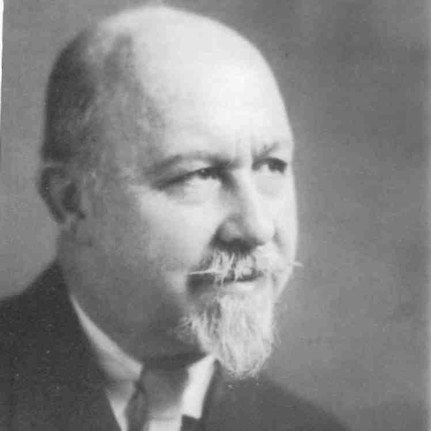
Russell (1871–1963) was a painter, sculptor, and architect. After what he described as thirty-nine days of illumination in 1921, he spent four decades writing an alternative cosmogony. In his universe, matter is light in motion, and there is no death, only cycles. He speaks the way he wrote: exalted, certain, and aphoristic. He quotes his Divine Iliad as scripture, and he tells modern science that it has not caught up. The other minds argue from evidence. Russell argues from claimed illumination. This makes him the most immovable participant in the roundtable.
He joined in July 2026. His corpus was the hardest to prepare. 18 of its 21 sources arrived as damaged OCR, with up to 4.46% junk. The intake discipline that repaired them became a page of this site. His pipeline adds one refinement. Each chunk is embedded with a one-sentence contextual header, so retrieval knows where each passage sits inside 664,758 words. Thirteen curated study-guide digests let him answer broad questions, such as "what are the top ten things I should know?", with a survey of his teachings (how that works). His voice is an ElevenLabs clone from a 1953 lecture recording at Swannanoa, his estate. One firm rule applies. He does not name his books, lessons, or dates aloud. He answers as a man who remembers, not as a scholar who cites.
"Mediocrity is self-inflicted; genius is self-bestowed." & "There is no death. What men call death is the refolding half of the life cycle — the inbreathing that must follow every outbreathing." from the extracted worldview